

How to Prevent ACL Tears in Soccer: The Program a Trial Found Cuts Risk by 64%
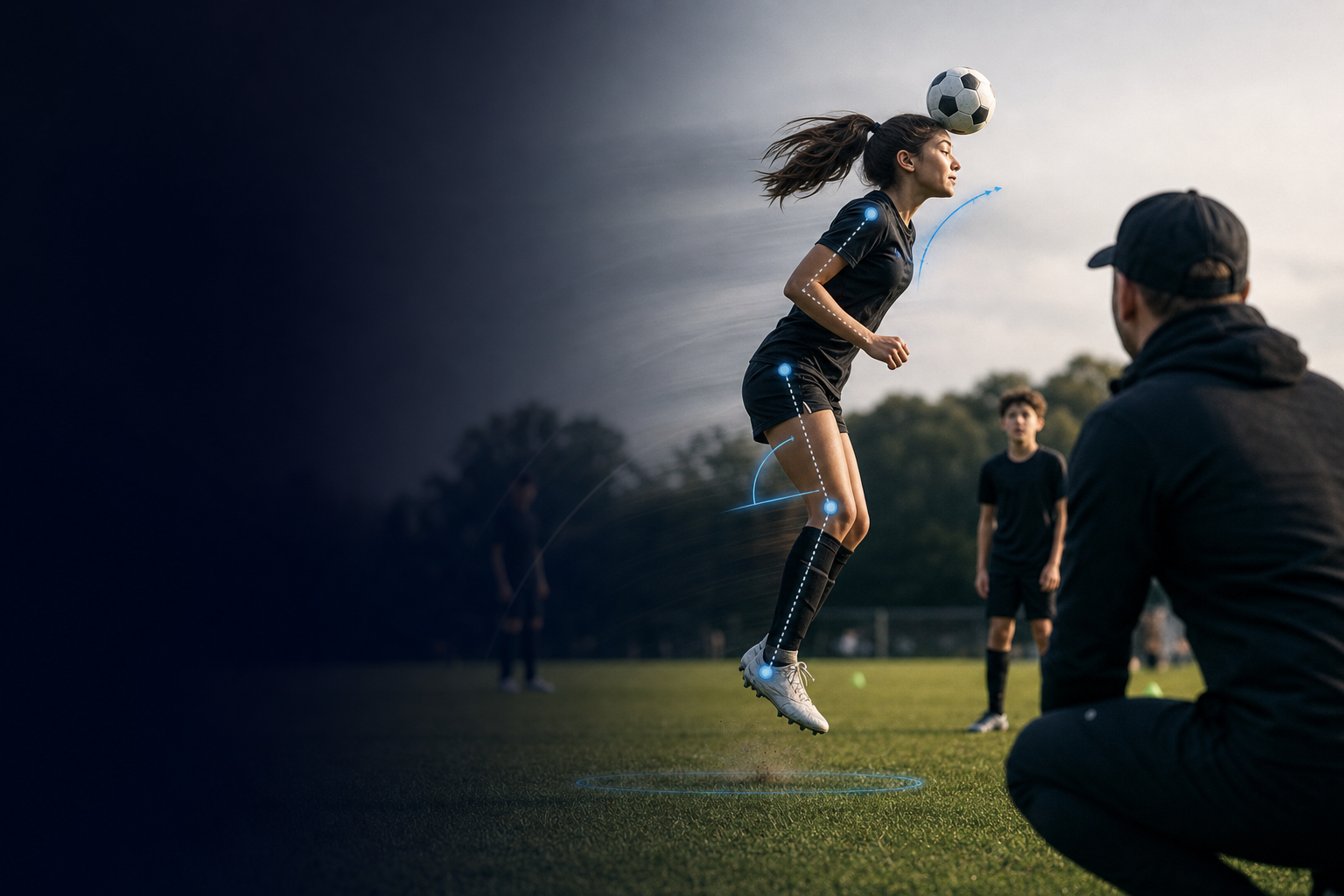
Most ACL tears in soccer do not come from a tackle. They happen when a player plants, cuts, or lands from a jump and the knee collapses inward under load. That detail matters, because it means a large share of these injuries are trainable problems, not bad luck.
This guide is for soccer coaches, athletic directors, and parents, not clinicians. It walks through why soccer carries one of the highest ACL injury rates in youth sports, the specific warm-up program a controlled trial found cut ACL tears by 64%, and how to roll it out across a team or club this season. For the broader picture across every sport and program option, see the full ACL injury prevention program guide.
One honest note before we start. No warm-up program makes a player tear-proof. The goal is to reduce risk, not eliminate it. But the reduction one trial measured is large enough that skipping this work leaves a team's health on the table.
None of what follows requires new equipment or a longer practice window. It is a different 15 minutes, not an additional 15 minutes.
Why soccer carries one of the highest ACL injury rates in youth sports
Soccer is not just another contact sport when it comes to the knee. In a meta-analysis covering more than 17 million athlete-exposures across youth and high-school-age sports, girls' soccer had a higher ACL injury rate than any other sport and sex combination studied: about 0.17 injuries per 1,000 athlete-exposures, compared with about 0.10 for boys' soccer.
That soccer-specific gap is even wider than the sport-wide pattern. Pooling every sport in that same analysis together, not just soccer, female athletes tore their ACL at roughly 1.4 times the rate of male athletes overall. Soccer is simply where the gap is most visible on its own, because so many girls play it and because the sport's cutting and landing demands line up closely with how non-contact ACL tears happen. A systematic review and meta-analysis in adolescent athletes is the source for both figures.
That is not a reason to treat boys' soccer as low-risk. It is a reason girls' and young women's teams should be first in line for prevention work, which we come back to below.
How ACL tears actually happen on a soccer field
Picture the moments that actually tear an ACL on a soccer field. A player decelerates hard to change direction. A player lands from heading a cross on one leg. A player plants to cut away from a defender. None of those moments require contact from another player.
About 70% of ACL tears are non-contact. Research on the mechanisms behind ACL injuries describes the pattern in most of these cases: the knee collapses inward over a planted foot, a position coaches sometimes call knee valgus, while the body is still moving forward or sideways at speed.
Soccer produces a lot of these moments in a single match. A winger decelerates at the touchline. A center back plants to turn after tracking a run. A forward lands awkwardly after out-jumping a defender for a header. Every one of those is a non-contact loading moment, not a collision.
This is the detail that makes prevention training work. If the injury mechanism were mostly collisions, a warm-up program could not do much about it. Because it is mostly a movement pattern under load, a program that retrains that pattern has something real to work with.
The warm-up program that cut ACL tears by 64% in a trial of soccer teams
Here is the single most useful number in this guide. A cluster randomized controlled trial followed 4,564 adolescent players, aged 12 to 17, across 230 Swedish youth soccer clubs for a full season. Teams were randomly assigned to either run a specific neuromuscular warm-up program or continue training as usual.
The result: seven ACL injuries in the group running the warm-up program, versus 14 in the control group. Because the two groups logged different amounts of total playing time, researchers compared injury rates rather than raw counts. That rate comparison showed a 64% relative reduction in ACL injury, and the confidence interval around that reduction did not cross zero, so it held up as statistically significant. The trial, published in a peer-reviewed sports medicine journal, flagged one honest limit: the absolute difference between seven and 14 injuries was small enough on its own that it fell just short of statistical significance. The relative-rate finding and the raw-count finding are two different measurements of the same data, not a contradiction.
The program itself took about 15 minutes, done twice a week throughout the season. It opened with five minutes of light running, then moved through six exercises:
| Step | Exercise | What it trains |
|---|---|---|
| 1 | One-legged knee squat | Single-leg control and knee alignment under load |
| 2 | Pelvic lift (bridge) | Hip and core stability |
| 3 | Two-legged knee squat | Squat mechanics and knee tracking |
| 4 | The bench (plank variation) | Core and trunk control |
| 5 | Lunge | Deceleration and single-leg strength |
| 6 | Jump and landing technique | Absorbing a landing instead of landing stiff-legged |
Each one of the six exercises had four progressively harder versions and a partner-based variation, so teams could scale it up as players improved over the season.
If this sounds similar to FIFA 11+, that is because it is the same family of training, built around the same idea: replace a generic warm-up with one built to retrain landing, cutting, and deceleration mechanics. A separate randomized trial of FIFA 11+ itself, the version now used by soccer federations worldwide, found a 46% reduction in overall injury rates among men's college soccer players. That trial measured all injuries, not ACL tears specifically, so the two numbers are not directly comparable. But together they point the same direction: a structured warm-up, done consistently, changes outcomes.
How a coach cues these exercises matters too. Research comparing coaching language found that external cues, telling a player to "land softly" or "stick the landing," produced better movement changes than internal cues like "bend your knees more." Say what you want the landing to look like, not which joint to bend.
Why girls' and young women's teams should run this first
If a club can only roll this out to a few teams first, start with the girls' teams. Girls' soccer already carries the highest ACL injury rate of any sport and sex group measured in the meta-analysis above, and the mechanism driving that gap, landing and cutting under load, is exactly what a neuromuscular warm-up targets.
The trial behind the 64% figure was run entirely in female youth soccer players, which is part of why it is the headline evidence here rather than a side note. A separate, longer trial of a comparable training program, also in female youth soccer players, followed teams for two full seasons and found a similar pattern: teams that ran the program saw fewer ACL injuries than teams that did not.
For a deeper look at why the sex gap exists and what else helps close it, see why female athletes carry more of this risk. For clubs managing multiple girls' teams across age groups, Greater's approach for club and select sports programs is built for exactly this kind of multi-team rollout.
How often to run it, and when to start
Dosage is not a minor detail here. The protective effect in the trial above came from running the program twice a week, throughout the entire season, not from a one-time install in the first week of preseason.
Three practical rules follow from that:
Start in preseason, before the first competitive match, so the movement patterns are already familiar once the season's cutting and landing load ramps up.
Keep it going every week during the season. The trial's protocol ran the warm-up twice weekly for a full season, and the injury reduction reflects that sustained dose, not a few early sessions.
Treat it as the warm-up, not an add-on. Programs that compete with practice time for a coach's attention get skipped under pressure. Programs that replace the jog-and-stretch teams already do tend to stick.
Checking an athlete's landing mechanics without a clinic visit
A warm-up program helps every player on the roster. But coaches and parents often want to know which specific players are landing in a way that puts more load on the knee, without booking a clinical movement assessment for an entire roster.
A simple phone video of a player landing from a jump, filmed from the front, can show a lot. A knee that drifts inward toward the other leg on landing, a stiff, flat-footed landing instead of an absorbed one, or a clear side-to-side imbalance are all patterns worth flagging for closer attention. None of this replaces a physical therapist's assessment for a player who has already had a knee injury, but it gives a coach a reasonable way to prioritize who needs the most coaching cues during warm-ups.
This is the gap Greater's AI movement analysis is built to close: upload a short video of a player landing or cutting, and get an objective breakdown of the mechanics instead of relying on a coach's eye alone across 20 players at once. For more on what this kind of video review can and cannot tell you, see what a phone video can actually tell you about landing mechanics. Try Greater free to see how it works on your own team's footage.
Rolling the program out across a team or club
The programs with the best results share a pattern. The warm-up is mandatory, not optional. Someone is actually tracking who does it. And it is rolled out sensibly across every team in a club, not treated as one team's side experiment.
Three things make that easier in practice. Put it on the practice plan as the first 15 minutes, every session, so it is not competing with anything else for time. Assign it the same way a coach would assign any other part of training, so completion is visible rather than assumed. And keep the exercises identical across age groups within a club, scaling difficulty with the built-in progressions rather than writing a new program for every team.
For schools and athletic programs coordinating this across multiple teams and coaches, Greater's tools for schools and athletic programs are built to assign a program like this to a full roster and show which players actually completed it, not just who was scheduled to. Many clubs pair this warm-up with a broader in-season strength block; an 8-week soccer strength program is a reasonable place to start.
A club running a dozen teams across age groups does not need a dozen versions of this program. The same six exercises work across ages, since the built-in progressions are how a 12-year-old's team and a 17-year-old's team can run the identical warm-up at different difficulty levels. What changes is coaching attention, not the exercise list.
After a tear: what changes before a return to soccer
If a player has already torn an ACL, the prevention program above is still relevant, just on a longer timeline. Return-to-sport guidance for competitive cutting and pivoting sports like soccer generally points toward nine months or more of structured rehabilitation before a full return to play, with progress judged by strength and movement quality rather than the calendar alone.
Prevention training does not stop once a player returns. If anything it matters more, since an athlete returning from ACL reconstruction carries a real risk of a second injury, particularly in the first two seasons back. Keep medical decisions with a physician or physical therapist. Physical therapists guiding a return to sport are the right people to clear a specific player for full training and match play, not a warm-up program or a coach's judgment alone.
Soccer and football share the same underlying mechanism, but the timing and the contact element differ enough to change how a program should be run. For the football-specific version of this breakdown, including where in a season and at which positions tears cluster, see our guide to preventing ACL injuries in football.
Run the warm-up. See who actually did it.
Assign an ACL prevention program to your full roster and check landing mechanics from a phone video, without chasing down every player yourself.
Try GreaterFrequently asked questions
How much does a warm-up program actually reduce ACL injury risk in soccer?
One cluster randomized trial of youth soccer players found a 64% relative reduction in the rate of ACL injury in teams running a specific 15-minute neuromuscular warm-up, compared with teams training as usual. The raw injury counts behind that figure were small, seven versus 14 across a full season, which is normal for a single-season trial of a rare injury.
Is FIFA 11+ the same program as the one in the 64% trial?
No. They are related but separate programs. The trial behind the 64% figure tested a different neuromuscular warm-up developed and studied in Sweden. FIFA 11+ is a related, separately studied program now used by soccer federations worldwide, with its own trial evidence showing a 46% reduction in overall injury rates in men's college soccer. Both use the same general approach: strength, balance, and landing technique work instead of a generic warm-up.
Do boys need this too, or is it mainly for girls' teams?
Both sexes benefit, but the risk is not equal. Girls' soccer has the highest ACL injury rate of any sport and sex combination in the research covered above, so if a club has to phase in a new program, girls' teams are the clear priority.
How many times a week should a soccer team do an ACL prevention warm-up?
The trial evidence behind the programs discussed here used the warm-up twice a week throughout the season, not as a one-time preseason install. Running it less often than that is a different, untested dose.
Can you tell if a player is at risk just by watching them play?
Experienced coaches can spot obvious patterns, like a knee that collapses inward on landing, but it is easy to miss subtler versions across a full roster in real time. A recorded video, reviewed afterward, catches more than a live glance during a drill.
Does this work for indoor soccer or futsal, or only outdoor 11v11?
The research behind these numbers was conducted in outdoor youth soccer. The underlying movement demands, cutting, decelerating, and landing from jumps, are present in indoor and futsal play too, so the same warm-up is a reasonable choice there, though it has not been separately trial-tested in those settings.